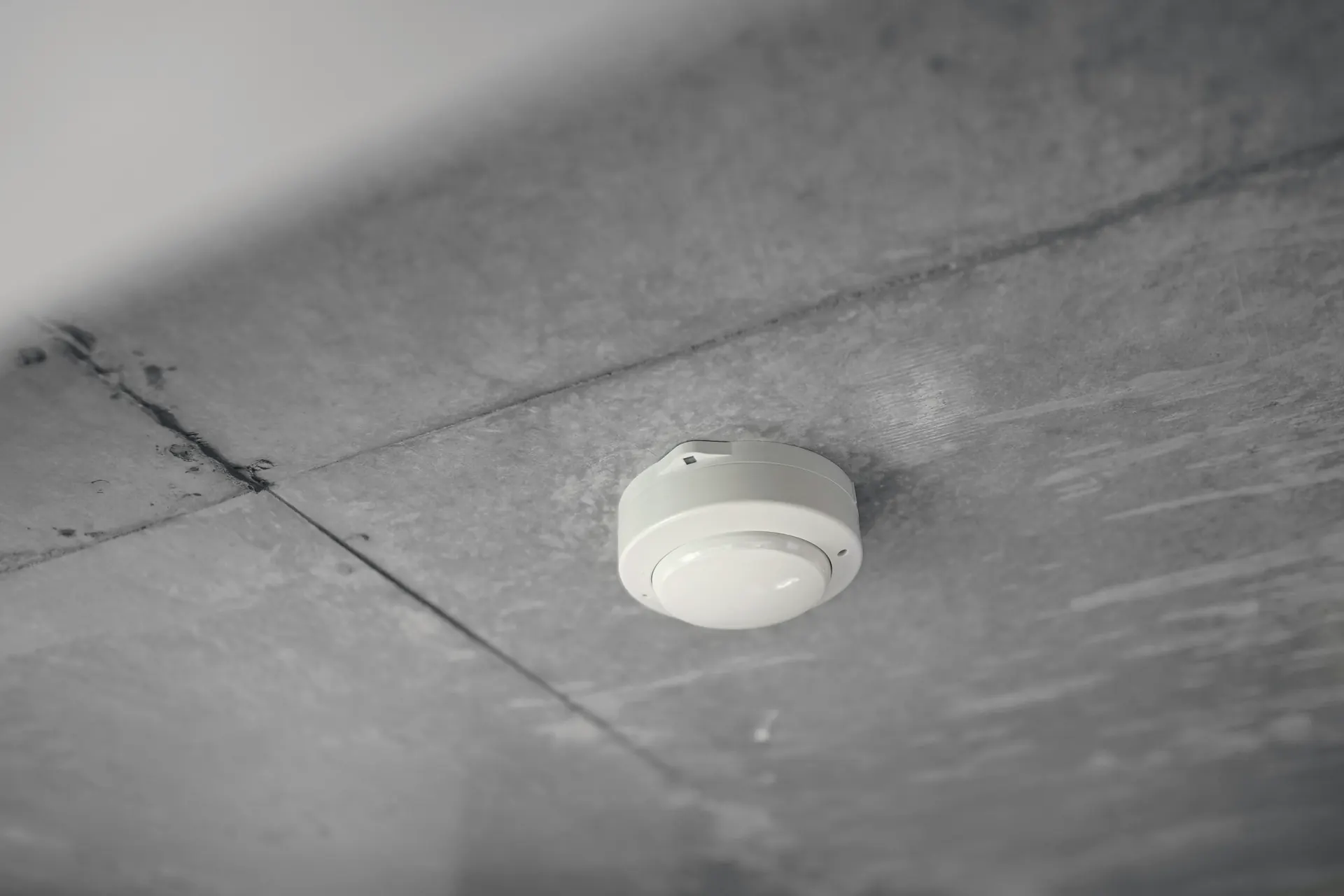
Working smoke alarms roughly halve the risk of dying in a home fire. The problem is that many homes have alarms that are missing, disconnected, or past their life. Take ten minutes and check every one.
Where they belong
Smoke alarms
- Inside every bedroom
- In the hallway outside each sleeping area
- On every level, including the basement
- On ceilings, or high on walls within 12 inches of the ceiling
- At least 10 feet from the stove to cut nuisance alarms
Carbon monoxide alarms
- Outside each sleeping area
- On every level of the home
- Near the door from an attached garage
- Not right next to fuel-burning appliances, where brief spikes cause false alarms
Combination smoke and CO alarms cover both if placed where both are needed.
Testing
Warn the household
Tell everyone so no one panics.
Press and hold the test button
The alarm should sound loudly within a few seconds. Use a broom handle for high ceilings rather than standing on a chair.
Check interconnection
In newer homes, alarms are linked. Pressing test on one should sound all of them. If one stays quiet, it may be faulty or disconnected.
That chirp at 3 a.m.
A single chirp every 30 to 60 seconds usually means a low battery. Batteries lose power faster in cold air, which is why alarms tend to chirp in the early morning. Replace the battery, then press test.
If the chirping continues with a new battery, or the alarm has a sealed 10-year battery, the unit has reached the end of its life and needs replacing.
Replacing hardwired alarms
Hardwired alarms connect to a plug-in harness. A replacement plugs into the existing harness only if the manufacturer lists it as compatible with that harness and with the other alarms it is interconnected with; check the packaging or the manufacturer’s compatibility chart. Anything else means wiring in a new harness: turn off the circuit, confirm it is dead with a voltage tester, and if you have not done this kind of wiring before, have a qualified electrician or our team do it.
Common questions
Do I need both smoke and CO alarms?
If you have gas appliances, a fireplace, a wood stove, or an attached garage, yes.
Should I disconnect an alarm that goes off when I cook?
No. Move it farther from the kitchen, or switch to a photoelectric alarm, which is less prone to cooking false alarms.
Our guides are general information for typical homes. Codes, permits and conditions vary, so check local rules, and leave gas, main electrical panel and structural work to a licensed professional.