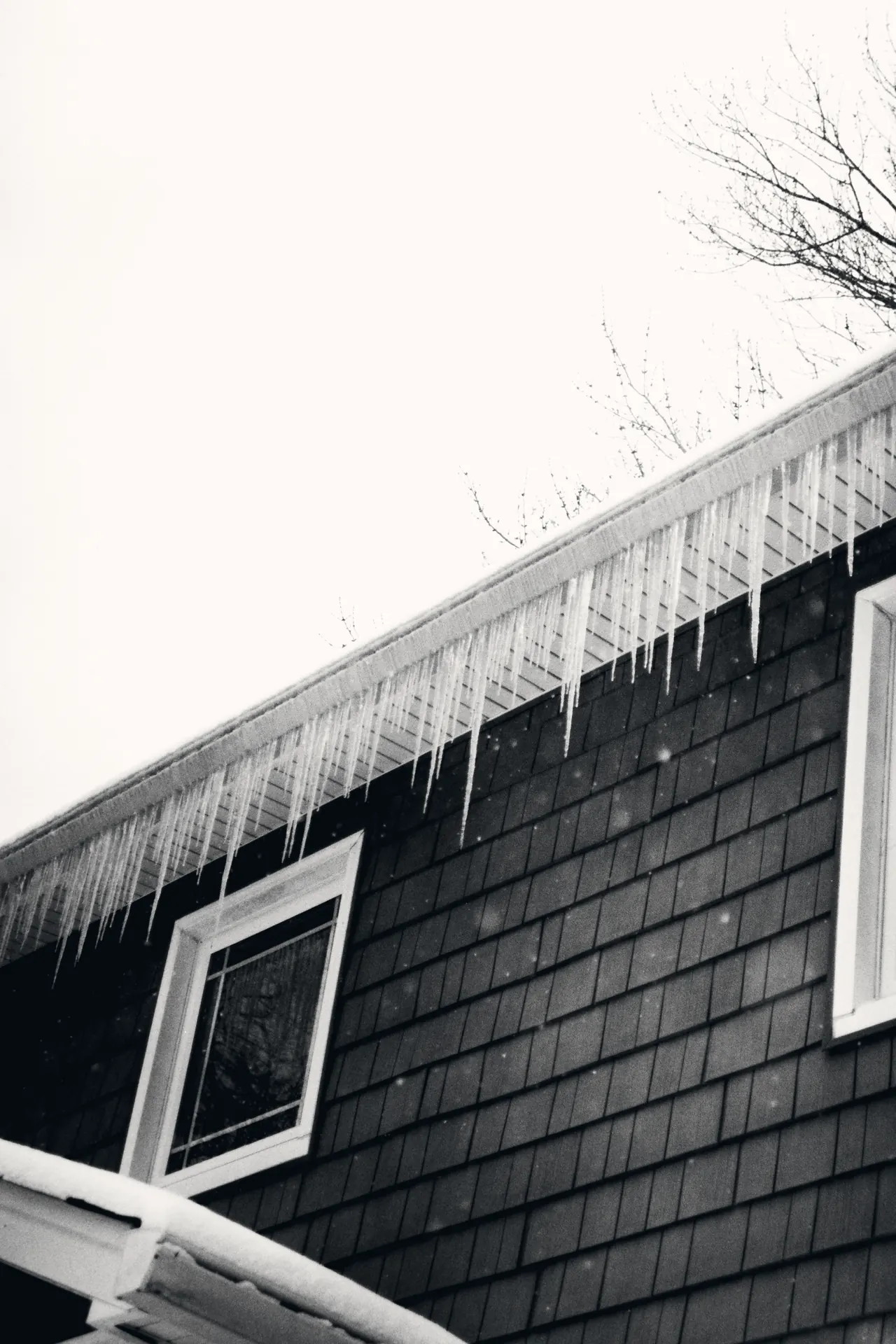
Picture a roof with snow on it. Heat leaking up from the house warms the roof deck over the attic. The snow there melts and runs down. When it reaches the overhang at the edge, which sits outside the heated house and is cold, it freezes again. That ridge of ice grows each day, and water backs up behind it, under the shingles, and into the house.
So the problem is not really the gutter. It is heat getting where it should not be.
Signs you have them
- Thick icicles along the eaves, especially with water dripping from them on cold days
- A ridge of ice at the roof edge with snow above it
- Water stains on ceilings or walls near exterior walls
- Damp or frosted attic insulation or sheathing near the eaves
If you have one right now
Do not chip at it
Hacking at ice with a hammer or axe damages shingles and gutters, and it is dangerous on a ladder.
Rake the snow
From the ground, use a long-handled roof rake to pull the bottom 3 to 4 feet of snow off the roof. Less snow means less meltwater.
Make a channel
Fill a nylon stocking with calcium chloride ice melt and lay it across the dam, hanging over the edge. It melts a channel for water to drain. Do not use rock salt; it damages shingles and plants.
Catch any water inside
Put buckets and towels under drips and take photos for insurance.
What actually prevents them
Air sealing
Most heat gets into the attic through gaps, not through the insulation itself: around plumbing vent pipes, wiring holes, the attic hatch, and the tops of interior walls. Sealing these with canned foam or caulk and weatherstripping the hatch makes the biggest difference.
Two places need different treatment because they get hot. Around a chimney or flue, foam and ordinary caulk are not allowed: the gap is closed with sheet metal and high-temperature fire-rated sealant, keeping the clearance the code requires. Older recessed lights not rated “IC” must not be covered or packed with insulation; they need an approved cover box or replacement with IC-rated, airtight fixtures. If you are not sure what you have, have it checked.
Insulation
Once the gaps are sealed, add insulation to the attic floor. In most cold climates the target is around R-49 to R-60, roughly 16 to 20 inches of loose-fill.
Ventilation
Soffit vents at the eaves and ridge or roof vents at the top let cold outside air sweep under the roof deck, keeping it close to outdoor temperature. Make sure insulation does not block the soffit vents; baffles keep the channel open.
Ice and water shield
When a roof is replaced, a self-sealing membrane under the shingles along the eaves stops water that does back up from getting into the house. It does not prevent dams, but it limits damage.
What about heat cables?
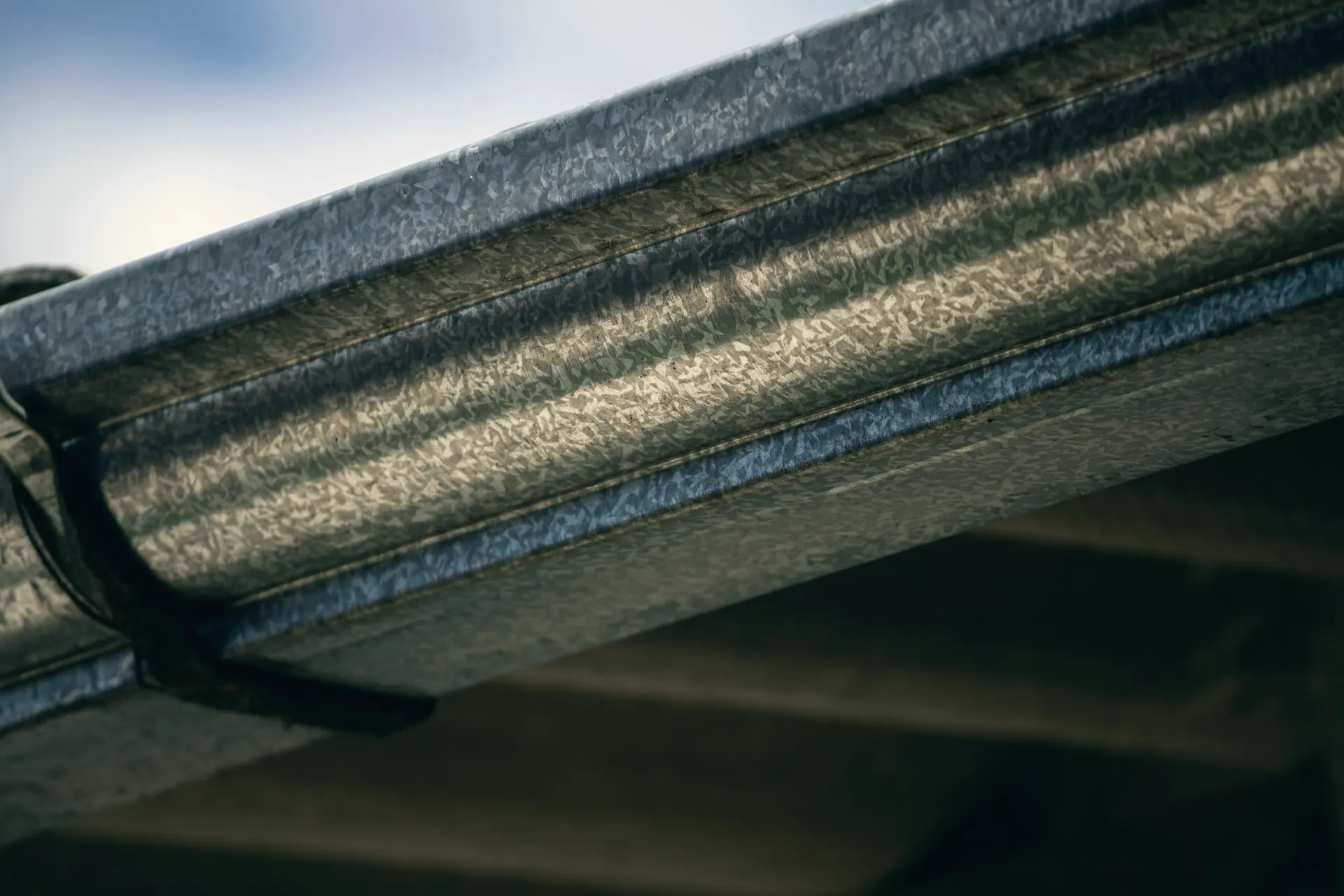
Zig-zag heat cables on the roof edge melt channels for water to drain. They help on problem spots like valleys over entries, but they use electricity all winter and treat the symptom. Do the attic work first.
Our guides are general information for typical homes. Codes, permits and conditions vary, so check local rules, and leave gas, main electrical panel and structural work to a licensed professional.