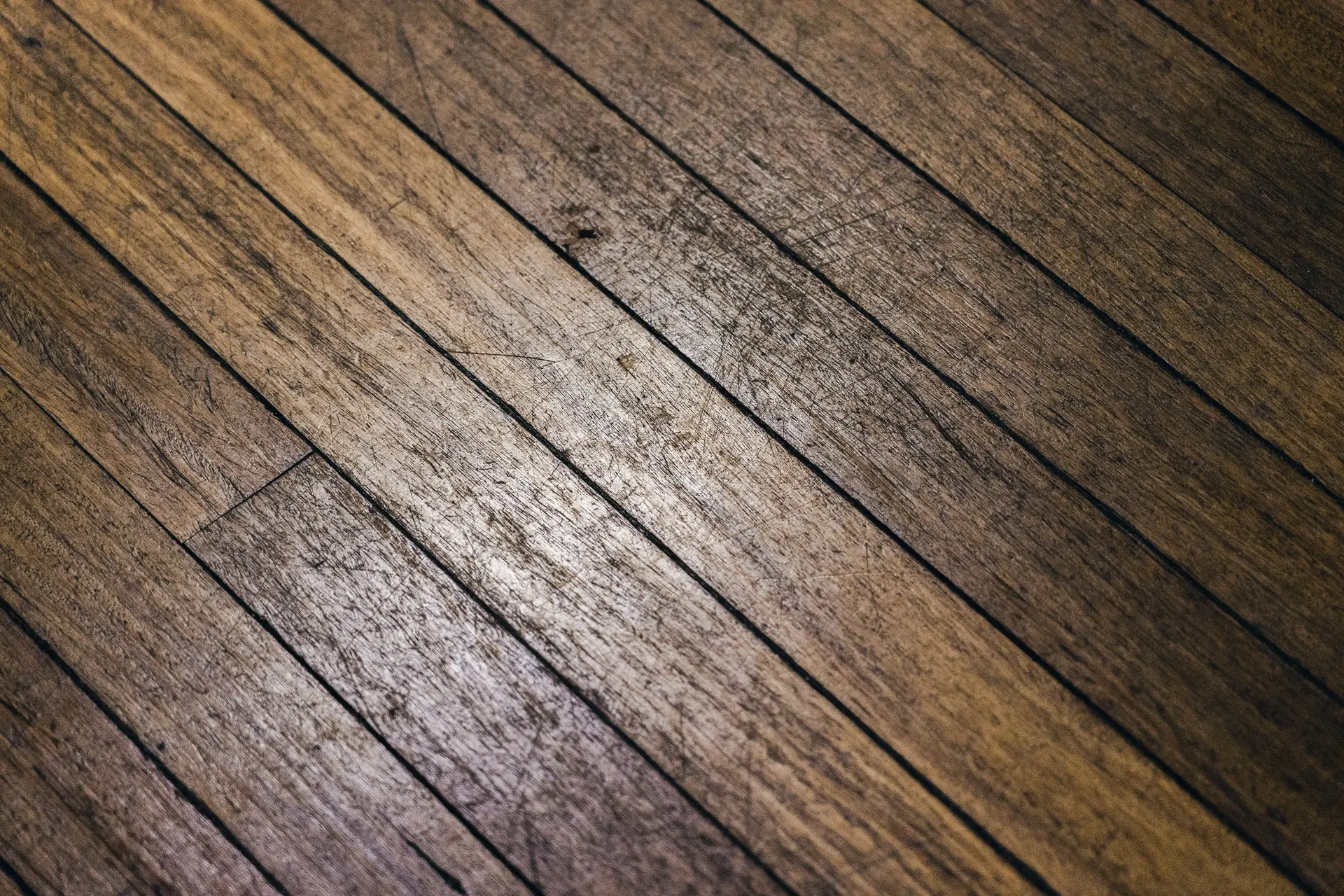
Wood floors shrink and swell with the seasons. As they do, nails loosen and small gaps open over the joists. Every step then pushes the subfloor down onto the joist and back up again, and you hear it.
Find the exact spot
Have someone walk slowly over the squeaky area while you listen, ideally from below. Mark the spot with tape. Then find the nearest joist. Joists usually run perpendicular to hardwood strips and sit 16 inches apart on center. A stud finder works through most floors.
Fixing it from below
If the floor sits over an unfinished basement or crawlspace, this is the better approach. It is invisible and lasting.
Look for the gap
With your helper walking above, watch where the subfloor meets the joist. You will often see it move.
Shim the gap
Coat a wood shim with construction adhesive and tap it gently into the gap. Gently is the word; forcing it can lift the floor and create a hump.
Or add a cleat
For longer gaps, glue and screw a length of 2×4 along the joist, pressed up tight against the subfloor.
Screw the subfloor down
For squeaks between joists, drive short screws up through the subfloor into the finished floor. Measure the total thickness first so the screws do not come through the top.
Fixing it from above
Under carpet
Squeak repair kits let you drive a special screw through the carpet into the joist; the screw head snaps off below the carpet surface. Find the joist, follow the kit’s depth guide, and the carpet closes over it.
Hardwood
Drill a small pilot hole through the board at an angle into the joist, drive a trim-head screw or finish nail, set it just below the surface, and fill with color-matched wood putty. Two fasteners angled toward each other hold better than one.
Stair treads
Stair squeaks are usually the tread rubbing on the riser. From below, glue small wooden blocks into the corner between tread and riser. From above, drive two angled screws through the tread into the riser and fill the holes.
When a squeak means something more
A floor that feels bouncy, slopes noticeably, or has started to squeak across a wide area all at once may have a structural issue: a cracked joist, a failing beam, or water damage below. That needs a closer look.
Common questions
Will talcum powder stop the squeak?
Between hardwood boards, powder can quiet a squeak for a while. It does not fix the gap underneath.
Do squeaks get worse in winter?
Often, yes. Dry heated air shrinks the wood and opens gaps. A humidifier can help.
Our guides are general information for typical homes. Codes, permits and conditions vary, so check local rules, and leave gas, main electrical panel and structural work to a licensed professional.