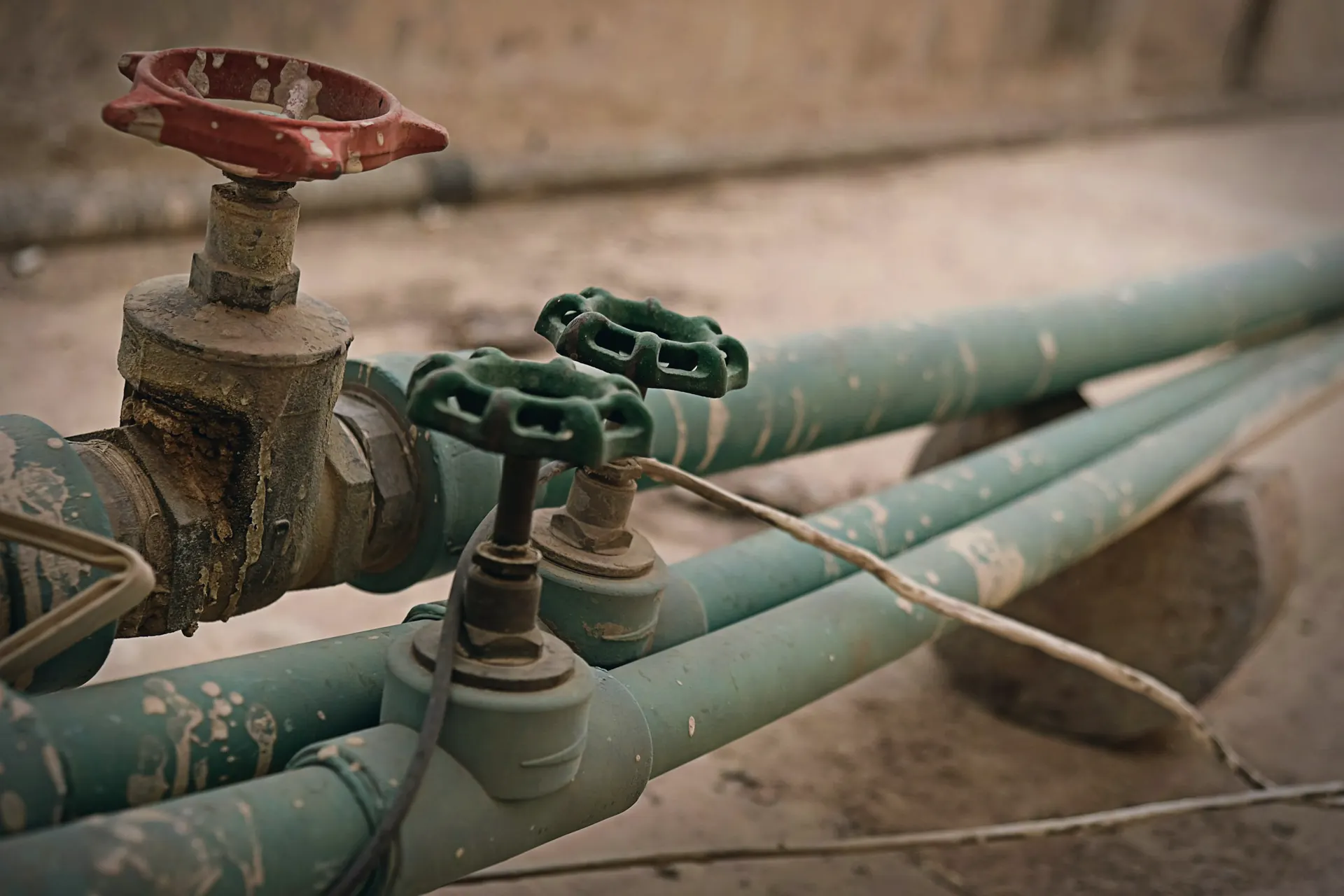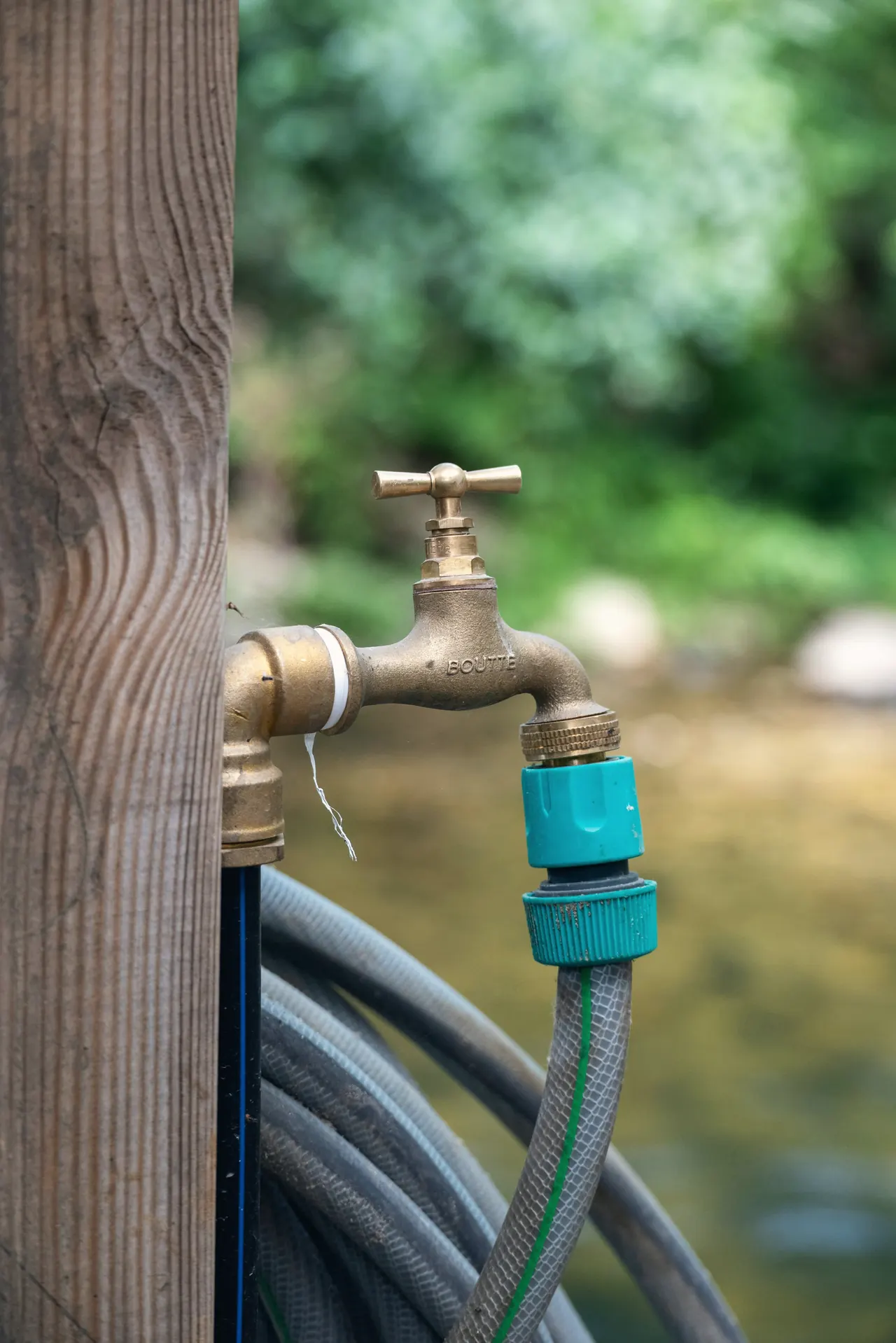
Here is how the damage usually happens. A hose stays connected through the first cold snap. Water trapped in the hose and the faucet freezes and expands back into the pipe inside the wall. The pipe splits. Nothing happens until spring, when someone turns the faucet on, and water pours into the basement ceiling or the wall cavity instead of out the spout.
It is one of the most avoidable repairs we do.
Which kind of faucet do you have?
Look at the faucet and the wall around it.
- Frost-free sillcock: the faucet body extends 6 to 14 inches into the house, so the valve closes inside where it is warm. Usually has a longer, thinner body and often a small vacuum breaker cap on top. Common in homes built in the last 30 to 40 years.
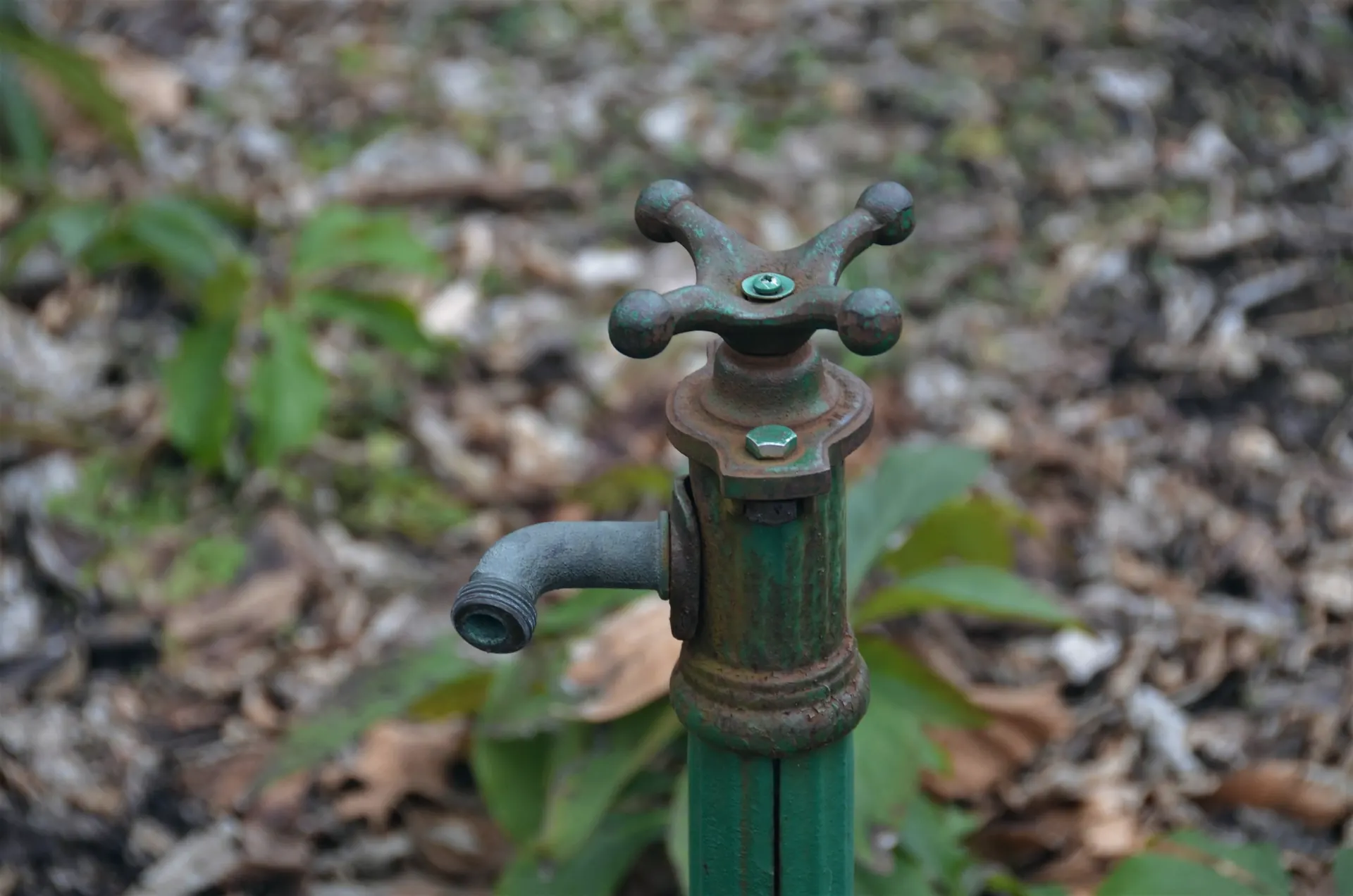
- Standard hose bib: the valve is right at the outside wall. These need an indoor shut-off and must be drained.
If you are not sure, look inside the basement or crawlspace behind the faucet. A standard bib usually has a separate shut-off valve on the pipe a few feet back from the wall.
Step by step
Disconnect every hose
Even on frost-free faucets. A connected hose holds water in the faucet body and defeats the frost-free design. Drain hoses and store them in a garage or shed.
Close the indoor shut-off
For standard bibs, find the valve on the supply pipe inside and turn it off.
Open the outside faucet
Let it drain completely. Leave it open over winter so any water left in the line can expand without splitting the pipe.
Drain the bleeder cap
Many indoor shut-offs have a small cap on the side. With a bucket under it, unscrew it to drain the water trapped between the valve and the faucet. Then replace it.
Fit a faucet cover
An insulated foam cover is a few dollars and adds a margin of protection, especially on north-facing walls.
How cold is too cold?
Pipes in exposed walls start to be at risk when outdoor temperatures fall into the low 20s Fahrenheit for several hours. Wind makes it worse. Do not wait for the forecast to say 10°F; by then the hose has already frozen. In most of the country, late October to mid-November is the window.
Checking for damage in spring
When you turn the water back on in spring, have someone stand inside near the wall while you open the outdoor faucet. If you hear water running inside or see a drip from the ceiling, close it right away. A split frost-free sillcock often only leaks when the faucet is open, which is why the damage goes unnoticed.
Common questions
Do I really need to remove the hose from a frost-free faucet?
Yes. The design only works if water can drain out of the faucet body. A connected hose stops that.
Can I leave the hose connected if I use it in winter?
Disconnect it after each use and let the faucet drain.
Our guides are general information for typical homes. Codes, permits and conditions vary, so check local rules, and leave gas, main electrical panel and structural work to a licensed professional.