Decks age outdoors, in the rain and sun, and the parts that fail first are the ones that stay wet longest. A deck that looks fine from above can be weak where it attaches to the house. Do this check every spring, and before any big gathering.
1. The ledger board
The ledger is the board bolted to the house that holds one end of every joist. When decks collapse, this connection is the most common point of failure.
- It should be attached with lag screws or through-bolts in a staggered pattern, not nails alone.
- There should be metal flashing over the top of it, so water runs away from the house instead of soaking the joint.
- Probe it with the screwdriver along its length, especially at the ends and around fasteners.
- Look for dark streaks or rot on the house siding or rim joist behind it.
2. Posts and footings
Check where each post meets the ground or concrete. Rot starts right at that line. Posts should sit on metal post bases that hold the wood off the concrete. Use the level to check the posts are plumb; a leaning post means the footing has moved.
3. Joists and connectors
From underneath, look at the metal joist hangers. Heavy rust, missing nails, or flaking metal means they need replacing. Probe the ends of the joists where they meet the ledger and the beam.
4. Deck boards
Walk the whole surface. Soft spots, boards that flex, cracks running the length of a board, and nails that have popped up are all worth fixing. A soft board can be replaced by itself; soft boards in a cluster usually mean the joist below is rotting too.
5. Railings
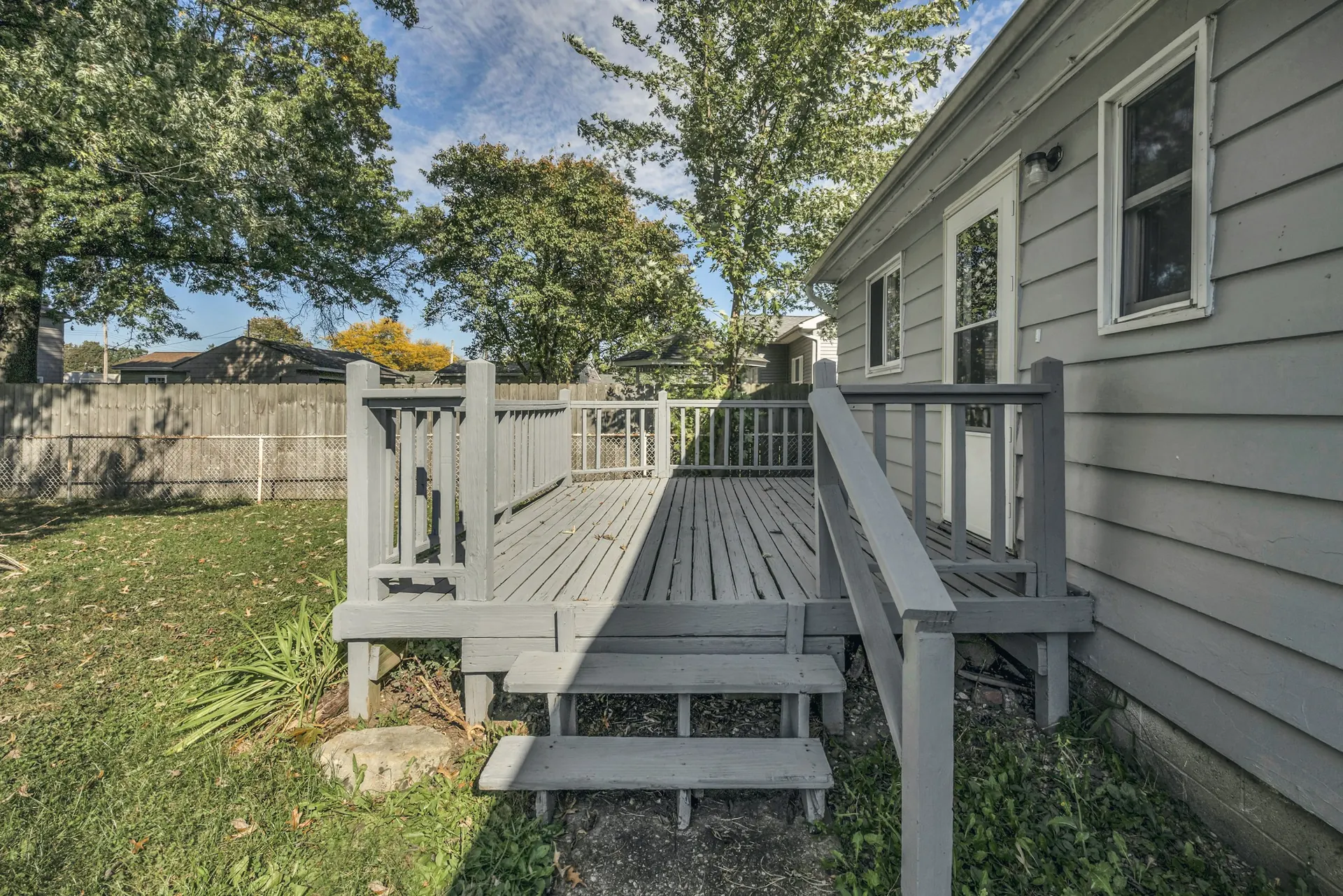
Push and pull firmly on every railing section and post. Railings should not move. Code generally calls for guardrails to resist a 200-pound outward push, and balusters should be no more than 4 inches apart, so a small child cannot slip through.
6. Stairs
- Probe the stringers (the angled boards that carry the treads), especially at the bottom where they meet the ground.
- Treads should not flex or rock.
- Stairs with four or more risers need a graspable handrail.
- Check the stair-to-deck connection: stringers should be fastened with hangers or bolts, not toenailed.
Common questions
How long does a wood deck last?
A well-kept pressure-treated deck often lasts 15 to 25 years. The framing may outlast the boards, or not, depending on drainage and care.
Can I replace just the boards?
Yes, if the framing is sound. It is a good time to check the ledger and joists while the boards are off.
Our guides are general information for typical homes. Codes, permits and conditions vary, so check local rules, and leave gas, main electrical panel and structural work to a licensed professional.