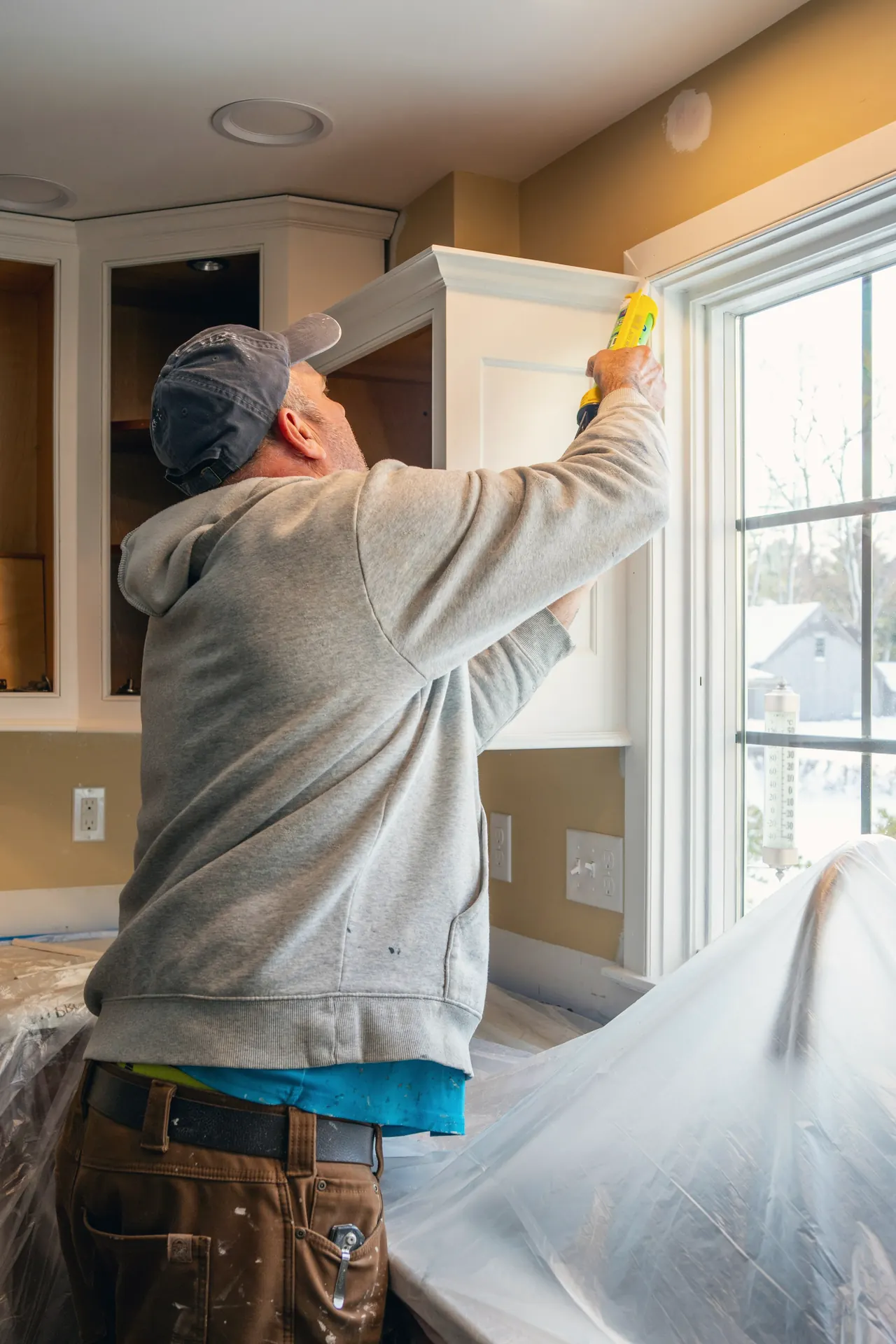
Caulk is the seal where two different materials meet: window frame and siding, trim and brick, siding and corner boards. Sun and seasonal movement break it down. Most exterior caulk needs attention every five to ten years.
Where to check
- Around window and door frames, especially the top and sides
- Where trim boards meet siding
- Where siding meets brick or stone
- Around pipes, vents, cables and outdoor outlets passing through walls
- Joints in fiber cement siding at trim (not the horizontal laps)
Choosing caulk
- Polyurethane or hybrid polymer sealants: flexible, durable, paintable. The best choice for most exterior joints.
- Siliconized acrylic (painter’s caulk): fine for interior trim and protected exterior spots, but shrinks and cracks faster in full sun.
- 100% silicone: excellent seal, but most will not take paint. Good for glass and metal.
Read the label for a movement rating. A sealant rated for ±25% movement or more handles expansion and contraction far better than a basic one.
How to do it
Remove the old caulk
Slice along both edges with a utility knife and pull or scrape it out. Leftover caulk prevents the new bead from bonding.
Clean and dry
Brush out debris and wipe the joint with alcohol. It should be completely dry; wait a day after rain.
Add backer rod
Press foam backer rod into wide or deep gaps so the caulk is about half as deep as it is wide. It saves caulk and lets the bead flex properly.
Cut the tip small
Cut the nozzle at a 45° angle, smaller than you think. You can always cut more.
Lay the bead
Push the bead ahead of the nozzle in one steady pass, so it is forced into the joint rather than laid on top.
Tool it
Smooth it with a wet finger or a tooling stick within a few minutes. Pull tape before it skins over.
Paint after it cures
Check the label; many need 24 hours or more before paint.
Common questions
Can I caulk over old caulk?
It might look fine for a season, but the new bead bonds to the failing old one. Take the old caulk out.
What temperature is too cold?
Most sealants need surface temperatures above 40°F while curing. Some cold-weather formulas go lower; check the label.
Our guides are general information for typical homes. Codes, permits and conditions vary, so check local rules, and leave gas, main electrical panel and structural work to a licensed professional.